My Dad’s Story
Harold Brown
Drummer, songwriter, and an original member of WAR. To me, he’s Dad.
This is a place to explore the music he helped make, the life around it, and the history we’re preserving together.
Harold Brown, from Making of the Beat.
Long Beach Roots
Harold Ray Brown was born in Long Beach, California, on March 17, 1946. In a 2020 interview, he described growing up in a family where music was part of everyday life, with records, radio, and gatherings at home bringing different sounds together. His connection to music began well before the records that would make him known around the world. [2]
He has recalled hearing his mother play piano in church, surrounded by tambourines and voices. As a schoolboy, a brief demonstration of how to hold drumsticks opened a door. He traded his violin for a snare drum, then worked to buy a drum kit. Those early experiences gave him a way to turn listening into something he could make himself. [1]
The Road to WAR
The group grew from musicians playing together in Southern California, through earlier bands including the Creators and Nightshift. In 1969, Eric Burdon and Lee Oskar became part of that developing story. The original WAR lineup brought together Harold on drums, Howard Scott on guitar, Lonnie Jordan on keyboards, B.B. Dickerson on bass, Charles Miller on saxophone and flute, Lee Oskar on harmonica, and Thomas “Papa Dee” Allen on percussion. [3]
Their sound crossed musical boundaries: rhythm and blues, jazz, rock, Latin rhythms, and funk. With Burdon, they reached a wide audience through “Spill the Wine” in 1970. After that chapter, WAR continued as a band with its own voice, creating music that could bring people together while speaking about the world around them. [3]
Before WAR: Eric Burdon and the Animals
Before WAR, Eric Burdon was the lead singer of the Animals, a British rhythm-and-blues band from Newcastle. His voice led their 1964 recording of “The House of the Rising Sun,” which reached No. 1 in both Britain and the United States. Their other hits included “Don’t Let Me Be Misunderstood” and “We Gotta Get Out of This Place.” [11]
He joined WAR in 1969, bringing that voice to “Spill the Wine” on Eric Burdon Declares “War” in 1970. This was WAR’s early chapter with Burdon, before the band continued without him and made the later hits featured here. [12]
Watch the Animals: The House of the Rising Sun ↗Jimi’s Last Performance
Ronnie Scott’s, London, England. September 16, 1970.
On September 16, 1970, Jimi Hendrix joined Eric Burdon and WAR onstage at Ronnie Scott’s Jazz Club in London. He sat in on “Mother Earth” and “Tobacco Road,” in what became his final public performance. Hendrix died two days later, on September 18. [13]
Dad was there on drums. In his 2017 interview with J-Zone for Red Bull Music Academy, he remembered Hendrix standing behind him while he played a slow shuffle, speaking into his ear: “Yeah Brown, right there.” He could see Hendrix’s left-handed guitar playing over his other shoulder. Decades later, telling the story still gave him chills. [1]
For me, this moment connects a piece of music history with my dad’s own experience.
A Groove of His Own
In his interview with drummer and writer J-Zone, Dad described watching the audience while he played. The movement of their feet mattered. His approach favored a recognizable groove and room for the other musicians, with Latin rhythmic ideas and reggae among his influences. He also recalled developing the beat for “Slippin’ Into Darkness” on the road, and spoke about songwriting as a shared effort. [1]
“Less is best.” ~ Harold Brown [1]
Records That Reached the World
A few landmarks from the years when Harold helped shape WAR’s recorded sound:
1971 · All Day Music
The album brought “All Day Music” and “Slippin’ Into Darkness” to a growing audience. [3]
1972 · The World Is a Ghetto
Home to “The Cisco Kid,” “City, Country, City,” and the title track. It became Billboard’s best-selling album of 1973, a major achievement for music that moved between celebration, reflection, and social observation. [4]
1975 · Why Can’t We Be Friends?
The album brought together “Why Can’t We Be Friends?” and “Low Rider,” two songs that became enduring parts of WAR’s identity. [5]
Why Can’t We Be Friends?
“Low Rider” reached No. 1 on Billboard’s R&B chart. Its life continued through sampling, cover versions, and television, including its use as the theme for George Lopez’s sitcom. “Low Rider” also offers a way to understand the group’s process. Song Exploder’s conversation with Lonnie Jordan and producer Jerry Goldstein describes a recording shaped through both band improvisation and careful editing. Harold’s drumming belonged to that collaborative construction, where the parts worked together to make the whole. [5]
Low Rider
Watch Low Rider on YouTube ↗Recognition Across Generations
2014 · GRAMMY Hall of Fame
The Recording Academy inducted WAR’s 1975 recording of “Low Rider” into the GRAMMY Hall of Fame. Harold Brown is named among its credited writers. This recognizes the recording’s lasting significance. [6]
2025 · Hollywood Walk of Fame
WAR received its star in the Recording category on June 5, 2025, at 6212 Hollywood Boulevard. The official announcement named Harold among the original members being honored, alongside fellow musicians whose work built the band’s legacy. [7]
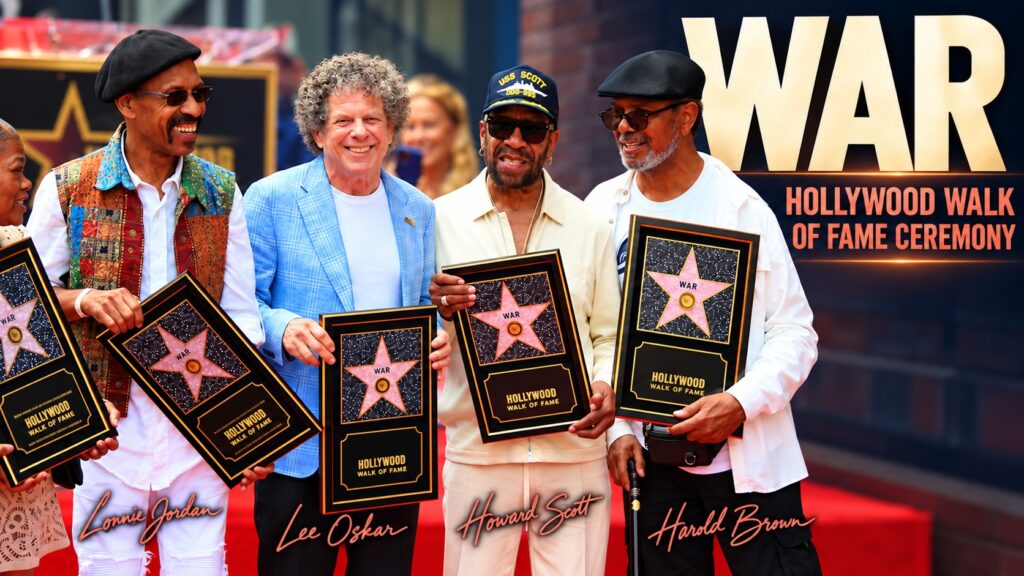
WAR’s Hollywood Star · June 2025
Music producer Jimmy Jam hosted the ceremony, with actor George Lopez joining as a guest speaker. The official tribute recognized WAR’s original members, including Dad, and remembered Charles Miller, B.B. Dickerson, and Papa Dee Allen. The video below captures that day on Hollywood Boulevard. [7]
At the ceremony, Dad thanked the parents who supported the band and helped them get to gigs. He also remembered the teacher whose brief drum lesson changed his life in 1957. His message was simple:
“Live your dreams, not somebody else’s.” ~ Harold Brown
Hear Dad’s Remarks at 32:03 ↗These honors belong to a collective body of work. They also mark the contribution of an individual musician whose rhythms have remained familiar to people who may never have known his name.
New Orleans and New Chapters
His life beyond WAR brought other kinds of work and learning. An OC Weekly profile describes his return to school in the 1980s and a later move to New Orleans, where he worked as a stagehand at the Saenger Theatre. He also became a historical tour guide and taught young drummers through Crescent City Drumming Camp. [8]
He continued making records. Alligator Records’ published credits for Eric Lindell’s Change in the Weather identify him on drums for “All Alone,” and on percussion for “Give It Time,” “Sunny Daze,” and “It Won’t Be Long.” The track-by-track credits show the different ways he contributed within an ensemble. [9]
By the time of the 2018 profile, he was teaching drum and piano lessons at First Lutheran School in Long Beach, the school where he had first picked up drumsticks. It is a meaningful circle: an early opportunity becoming something he could offer to another generation. [8]
The Lowrider Band
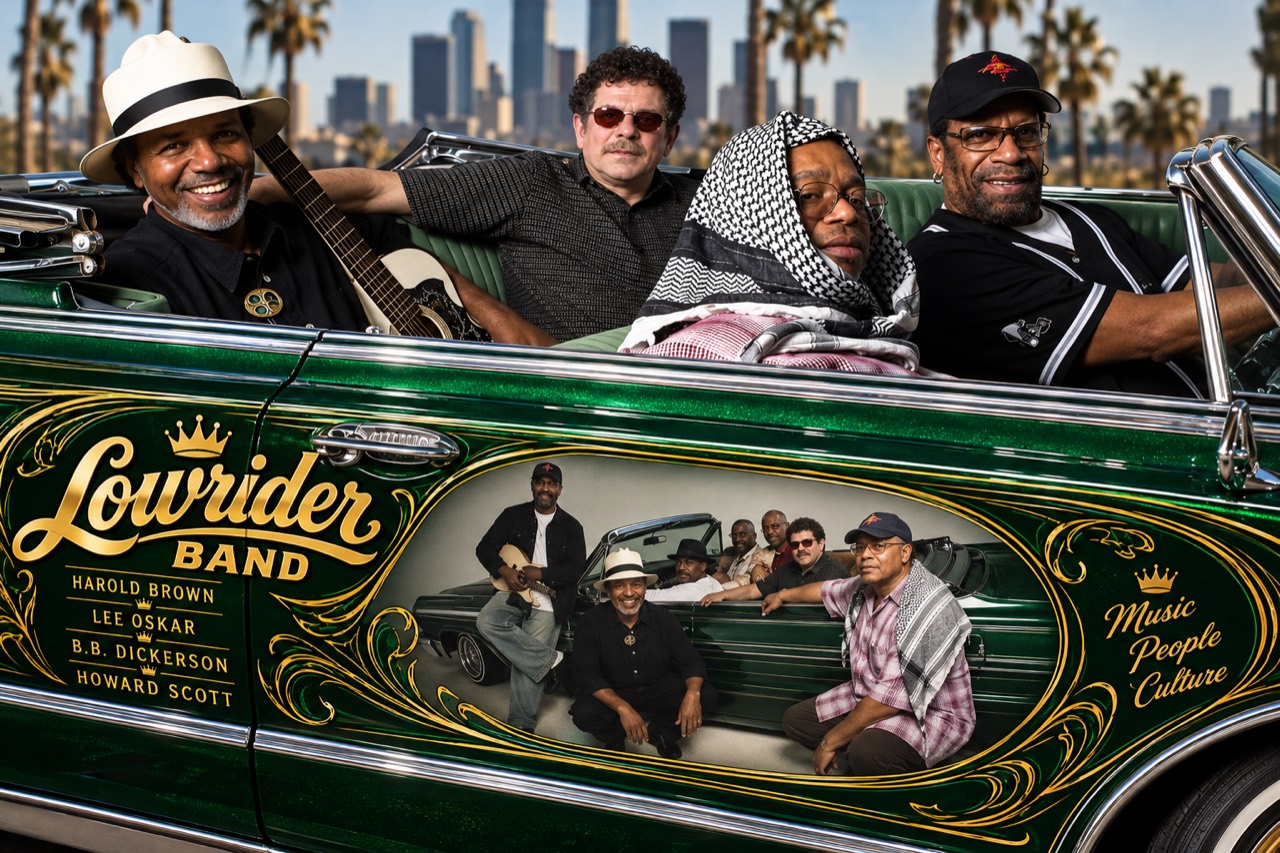
The Lowrider Band brought Harold together with original colleagues Howard Scott, Lee Oskar, and B.B. Dickerson. Their shared history and repertoire carried into another chapter, with the musicians behind those recordings continuing to connect through the music they helped create. The band’s official website also remembers Dickerson, Charles Miller, and Papa Dee Allen. [10]
Snoop Dogg’s Acknowledgment
In this clip with the Lowrider Band, Snoop Dogg acknowledges the original members of WAR and the influence their music had on him. Dad joins in toward the end.
For listeners discovering the story, WAR’s original recordings and the Lowrider Band belong to the same musical history. They offer different entry points into the work of musicians who built a distinctive sound together.
My Dad, and the Story We’re Preserving
For me, Harold Brown is my dad. He brought me into drums, and music became part of how I experienced the world. I later performed with WAR myself, on keyboards, percussion, and vocals. That connection is part of my own story, and part of why I want to make room for his here.
Alongside the music, Dad kept cameras close. He filmed life around the band during the 1970s: the travel, the people, and the moments between performances. The material he preserved is now the foundation of The Archive, a documentary I’m developing from our family’s collection.
The collection includes 269 original reels, about 75 hours of footage, covering 1972 through 1978. It gives us a way to look beyond the familiar songs and into the lives surrounding them. This page is one beginning. There are more memories, photographs, and stories to bring into it as the work continues.
Explore The Archive ↗Read and Listen Further
Interviews, recording credits, and official histories behind this page. The interviews also offer a chance to hear Harold tell parts of the story in his own words.
[1] Red Bull Music Academy: Give the Drummer Some (2017) ↗
[2] Coluna Blues Rock: Harold Brown Interview (2020) ↗
[3] WAR: Official Band Biography ↗
[4] Rhino: The World Is a Ghetto ↗
[5] Song Exploder: WAR, “Low Rider” (2024) ↗
[6] Recording Academy: 2014 GRAMMY Hall of Fame Inductees ↗
[7] Hollywood Walk of Fame: WAR (2025) ↗
[8] OC Weekly: Harold Brown’s Long Beach Homecoming (2018) ↗
[9] Alligator Records: Change in the Weather Credits ↗
[10] Lowrider Band: Official Website ↗
[11] ABKCO: The Animals Biography ↗
[12] Recording Academy: Eric Burdon at the GRAMMY Museum ↗
[13] Guitar World: Jimi Hendrix’s Final Performance at Ronnie Scott’s (2022) ↗
← Back to Music & Film